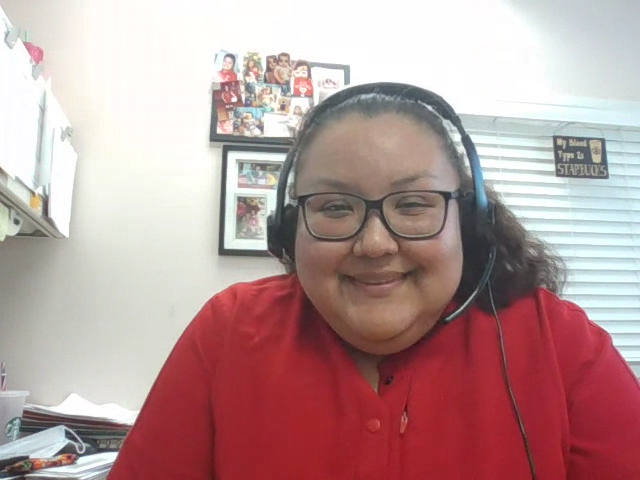
Guadalupe Becerra-Perez and Cyndi Ragona

Recorded June 30, 2022 36:00 minutes
0:00 / 0:00
ID: ddv001849

Description

Colleagues Guadalupe Becerra-Perez (40) and Cyndi Ragona (51) share a conversation about working in a community clinic during the COVID-19 pandemic and about the importance of mental healthcare for healthcare professionals.

Subject Log / Time Code

GBP talks about what inspired her to become a nurse.
CR talks about the motorcycle accident that led to her being in the hospital for five weeks and how that time in the hospital inspired her to become a nurse.
GBP talks about how the COVID-19 pandemic impacted her role at work. CR and GBP also talk about maintaining a walk-in clinic seeing as many as 1,000 patients a day during the pandemic.
GBP and CR talk about the bonds that formed at work during the pandemic. GBP and CR also talk about opening their doors to people who didn’t know where else to go and about the long lines that would form outside the clinic each morning.
CR and GBP talk about when vaccines were available and the difficulties of having to turn people away.
GBP says she turned to her husband for support during the pandemic. CR and GBP both say that their relationships with their spouses grew closer during the pandemic.
GBP talks about the importance of mental healthcare, specifically for healthcare professionals.
GBP talks about the stigma around seeking mental health services.
GBP talks about some of the things she does for self-care.
CR talks about some of the things she did for self-care, including yoga.
GBP talks about how the COVID-19 pandemic has changed her, saying that it helped her to be closer and more attentive to her family. CR says she has grown closer to her family as well.
GBP and CR talk about what the “new normal” might look like in healthcare and about lessons that can be learned in healthcare from the COVID-19 pandemic.
GBP and CR share their gratitude for one another.

Participants

  • Guadalupe Becerra-Perez
  • Cyndi Ragona

Partnership Type

Fee for Service

Transcript

StoryCorps uses secure speech-to-text technology to provide machine-generated transcripts. Transcripts have not been checked for accuracy and may contain errors. Learn more about our FAQs through our Help Center or do not hesitate to get in touch with us if you have any questions.

[00:04] CYNDI RAGONA: Hi, my name is Cindy ragona. I am 51 years old. Today is Wednesday, June 29, 2022. I am in San Jose, California, right now. The name of my partner is Lupe, and she is one of my managers at my clinics and my coworker.

[00:25] GUADALUPE BECERRA PEREZ: Hello. My name is Guadalupe Becerra Perez. I am 40 years old today. Today's day is Wednesday, June 29, 2022. I'm right now. I'm in San Jose, California. And the name of my partner is Cindy Rogona. She is our director of nurse. Sorry, a director of operations and my boss.

[00:55] CYNDI RAGONA: So, Lupe, how long have you been working for Gartner?

[01:00] GUADALUPE BECERRA PEREZ: I've been working with Gardner for 10 years now.

[01:04] CYNDI RAGONA: All right, so double the time I've been here, yes. And what inspired you to become a nurse?

[01:15] GUADALUPE BECERRA PEREZ: What inspired me to become a nurse? Well, the recession of 2008, and my previous employer, I used to work for Community Health Partnership, one of our was it partners. And, you know, I was advocating for community health centers like Gardner Health Centers, you know, making sure that Medi Cal wasn't cut from the budget and just advocating for healthcare. And that's how I was involved. And then 2008 recession came. Because it was a nonprofit organization. I was one of them, one of the employees who was let go due to the recession. And I took that opportunity. I said, what better way can I. What can I do to help my community? And decided to go to nursing school. And here I am. How about you? I mean.

[02:20] CYNDI RAGONA: Oh, well, I started in the medical field a long time ago, over 20 years ago. I actually was in a horrible motorcycle accident and spent five weeks in the hospital. So I just remember laying there and with the different nurses that would come and go and the different people that would touch me, remembering how much better I felt when some people came in the room. And so thinking that I wanted to bring that happiness and joy into healthcare. And so it actually, as soon as I got out of the hospital and, well, as soon as I got walking again, I was able to go to school and got in the medical field. And it really. Yeah, it really inspired me, just seeing how different people and different personalities really touched and impacted my ability to heal. That was huge to me. So how did your role change during this pandemic, Lupe?

[03:13] GUADALUPE BECERRA PEREZ: I mean, from being a women's health case management to case manager, to now running, managing the whole clinic. I mean, and then, you know, being part of the planning process for COVID testing at the very beginning to opening. Being part of the team who open These mass vaccination, mass testing centers like the one we had at the Mexican Heritage Plaza. I mean, it was just a learning, you know, new role, just learning as we go with COVID you know, all these changing isolation guidelines and everything, it was just, it was a challenge. But at the same time it felt good because we were making, we were providing the services that our community needed at that time.

[04:08] CYNDI RAGONA: Absolutely. I feel like we totally learned on the fly. It was no manual came with COVID We had no idea what we were doing. And then the guidelines changed so often that we had to keep up with everything. That was really hard. It was really hard. And we were. People looked at us like we were crazy. When we said, we're going to do a walk in clinic and we're going to see up to 1,000 a day, they looked at us. I remember being asked, are you sure you know what you're doing? I'm like, no, of course I don't. I'm not sure. But this is what I think could happen. And I remember it being so important to us to have walk in because all the signups for the testing in the state of California made it complicated for people if they couldn't read or elderly people who couldn't kind of get through that system. And it was so. It was so overwhelming for people that we were like, just, we, we have to do walk in. And yeah, I remember people looking at us like we're crazy. And sometimes I think we probably felt like we were, but I feel like the need in the community was just so great. We had to do something. We are so lucky though. We had the nursing school to partner with us. I mean, having those students that were out there getting their clinical hours was life saving. I don't know that we could have done it with our own staffing.

[05:23] GUADALUPE BECERRA PEREZ: Yeah, I mean, we were short staffed to begin with. We would have been able to do anything or at least make an impact like the way that we did. I mean, the county was coming into our, you know, our site. Right. Learning from our.

[05:39] CYNDI RAGONA: Yes, they were mimicking. That was, yeah, that was flattering and overwhelming at the same time. But there were times, remember our team was so like, they would get sick. We would have half our team out with COVID because this was before vaccines. And I remember we would hop from, from registering patients to testing them. And I like, I haven't worked on the floor as a medical assistant in 20 years probably. And I was like, well, I could do this again. Fine, it's fine. Yeah, we were. And you were Just doing double duty, like playing the manager and doing that. Crazy times.

[06:13] GUADALUPE BECERRA PEREZ: Yes. Crazy, crazy times.

[06:17] CYNDI RAGONA: I wouldn't change a thing, though.

[06:19] GUADALUPE BECERRA PEREZ: No, I think we. We grew as a. As a team, and we grew. We were more of. At the end, towards the end, we became more of a family.

[06:28] CYNDI RAGONA: Absolutely.

[06:29] GUADALUPE BECERRA PEREZ: We were so close. We knew what troubles we were all having in our personal lives and all the laughs. And I'm like, oh, should we be laughing? I mean, we are in the middle of a pandemic, but I feel like.

[06:43] CYNDI RAGONA: If we didn't laugh, we might be crying at times.

[06:45] GUADALUPE BECERRA PEREZ: Right.

[06:46] CYNDI RAGONA: And we would. Yeah, we had to. We had to. Right? We had to keep it light sometimes, and we had to keep going. So how are you able to keep showing up throughout the many surges of the pandemic?

[07:01] GUADALUPE BECERRA PEREZ: Like I said, just having that team that became more of a family. I think that what made me come just every day to work, okay, like, we're on this together. We're going to do this. We're going to get through this. Another day, another thousand, you know, people that would become in contact. I mean, there is times where, like, I was swabbing a. A patient with some or like, somebody with symptoms, and I'm like, this person's gonna be positive. Like, I. I can. I know already they're going to be positive. And sure enough, I would record that name in my. In my head. And when that report came in, they were positive. So it is just knowing that I had a very close team, and I think that is what helped me come to work the next day. And not only that, it was the impact that we were doing in our community. Right. You know, having seen our elderly population being able to get tested, especially because they were the most vulnerable and being just available to them, it was. It just meant a lot to me. I mean, that could be my grandma, my aunt, you know, waiting to get tested in other sites and just having the ability to come to our site and just get tested with no problem. It was. It felt good.

[08:32] CYNDI RAGONA: And it felt like a lot of places in the community were closing their doors if people were sick, so people didn't know where to go. And I felt like we opened our doors, and even though we exposed ourselves a lot and we exposed our team a lot, I felt like somebody had to do it, and we signed up for this. But do you remember the long lines, like, coming early in the morning and seeing hundreds of people lined up down the streets and thinking, oh, my gosh, what did we do?

[09:03] GUADALUPE BECERRA PEREZ: Yes. Yes. I mean, you even get even earlier than me.

[09:08] CYNDI RAGONA: I would be there to set up, like at some 7 and setting up the easy ups and the tables and just so many people. So many people just needed to be tested and didn't feel good or had been exposed or were scared, you know. So it did feel good. Oh, yeah. In there. I remember the rain. Yeah. I learned how to set easy ups quickly in the rain and not get totally drenched, but set taking them down. I don't have that skill set. And I always got drenched.

[09:39] GUADALUPE BECERRA PEREZ: I know. It was just, you know, crazy, crazy times.

[09:45] CYNDI RAGONA: And then when we added the vaccine. So that was just when we started, right. So we started doing the testing, and then when we added vaccines, the desperation and all the guidelines on, you only can start with this, people. So first it was only from a certain age or a certain occupation. And then we had to play this block, which was a horrible feeling. Right? Like standing at the front and saying, sorry, it's not your turn, you know?

[10:08] GUADALUPE BECERRA PEREZ: Yeah. Yes. Yes, it was. I think that was. It's one of the hardest things during our pandemic. Right. Once. Once we had this vaccine, this treatment for the. For Covid. And saying, oh, no, you.

[10:22] CYNDI RAGONA: Exactly, exactly. It felt horrible being the block. And I was so, so relieved when the guidelines were lifted and we could just vaccinate anybody. It was. It felt so good, you know, and then the days that we had, like, extra vaccine that was already open and we had to give it away. Being able to walk out to those people that we know didn't qualify yet, but had waited for two hours to see if there was extra. I mean, it felt good. Like, yes, come on in. We could do this.

[10:48] GUADALUPE BECERRA PEREZ: We were taking the last drop of that. That vial.

[10:52] CYNDI RAGONA: Yeah.

[10:52] GUADALUPE BECERRA PEREZ: Making sure we can vaccinate the most in a day.

[10:58] CYNDI RAGONA: No, absolutely. I felt like we. We made a game of how many. Can we get an extra dose out of those vials so that we could help somebody that wouldn't quite qualify yet, but was so desperate to get vaccinated the end of the day there. So who did you turn to during the pandemic for support? I know it was. It was a hard time. It was stressful. So who did you go to?

[11:19] GUADALUPE BECERRA PEREZ: It was stressful. I mean, I think personally it was my husband. I think our bond as a marriage became stronger because he would see me, like, go in day in, day out, day in, day out, even on weekends, calling patients, letting them know that they were testing positive and the guidelines and how important it was for them to isolate and to test. And he understood why I Did what I did, why I woke up early, why I put in a way myself and my family in danger, because I was exposing myself. Exposing them.

[12:04] CYNDI RAGONA: Yeah.

[12:05] GUADALUPE BECERRA PEREZ: But he knew that it was something, that it was like a calling for me and that it fit what I wanted to do in my career. Um, so it was just him.

[12:21] CYNDI RAGONA: It's funny you say you guys became closer during that time because my husband and I most definitely did the same thing. I think the support that he showed was incredible. And I, he took over everything. Like, I, I didn't have time. I was leaving at 5:30 in the morning and getting home like 8:00 at night. And you and I both know that we, we commute here. So we don't just get to go home at the end of the night. We get an hour and a half drive to get there.

[12:46] GUADALUPE BECERRA PEREZ: Right.

[12:47] CYNDI RAGONA: So we, we had to depend on our. My husband did all the cooking and the cleaning and he would have dinner made. Although those first days I think he was very fearful. He did that very first day of our Covid clinic, knowing that I was around so many people that were sick and needed to be tested. He did meet me on the front porch with a laundry basket and asked if I would go ahead and leave my clothes in the laundry basket outside. And he had a can of Lysol in his hand, so I think he was a little nervous. So I had to ease into, please don't spray me down with Lysol. I'll be okay. But he, he definitely adjusted. But there was a lot of fear for him also. And, and you as well as I. We both have our mom in our house too, so I know we were always talking about taking care of ourselves so that we don't bring anything home to our elderly parents. So. Yeah. But I mean, thank God we both had such incredible supportive spouses, right? Yeah.

[13:46] GUADALUPE BECERRA PEREZ: I mean, your husband even helped us set up on one of those Saturday pop ups that we had.

[13:53] CYNDI RAGONA: He did that? Yeah. He loves when I volunteer him for stuff. He, you know, he, he did. I forgot. And our very first testing clinic, he actually helped come out and set up. Although when he heard all the coughing and stuff, he was a little bit nervous and he, he said, I'll come back later and tell you. Tear it down. Yeah, yeah, it was it. That was good that we had that support. I don't know how I would have made it. Those were long hours. Long hours. No days off. I remember us, we would always talk on the weekends, you know, because you guys were calling all the positives and I was running the reports and reporting to the county, and I remember my mom walking in and she's like, you know, you're not supposed to work on Sundays. That's a sin. And I said, well, what, Lupe Sinning too? Mom, we gotta get this done. We'll be forgiven later. It's okay.

[14:48] GUADALUPE BECERRA PEREZ: Hopefully, right?

[14:50] CYNDI RAGONA: Absolutely. So I know mental health was really important, and we talked about this a lot for healthcare workers, but what do you wish that you can tell other healthcare workers about seeking out support for their own mental health during this challenging time?

[15:06] GUADALUPE BECERRA PEREZ: I think it's important. I think now in society, mental health is a must in order to live a very balanced life. Mental health is important to maintain your goals, to just, you know, live. Be being able to live day by day, especially with. I mean, covet. I mean, two years and a half and we're still dealing with COVID I mean, now we have, what, the monkeypox coming along. So it's just.

[15:35] CYNDI RAGONA: It'll be our next clinic.

[15:37] GUADALUPE BECERRA PEREZ: No, it's. It's important. I think we as healthcare professionals should have that mentality to not be afraid to seek out for mental health. I mean, it doesn't necessarily have to be like a social worker or a counselor, but just have somebody who's there. We both have our husbands, we have friends. I mean, our team has become together a small little internal family. And we were talking on, you know, we keep talking, you know, on our days off. I mean, other members of our team, it's. We've become closer and just having that person to talk to, just to vent, you know, venting can do a lot. Just let. Hear me out. You don't have to say anything. Just hear me out. That just, I think, releases a lot of the stress and the bad energy that unfortunately, healthcare is now. Healthcare has changed drastically. We have surges with new variants, possibly another pandemic with smallpack. I don't know, what's it called? Monkey pox. It's just changing. I think mental health is important for everybody, and we shouldn't be afraid to seek for it.

[17:08] CYNDI RAGONA: But do you think there's a stigma behind seeking, you know, help? Because I feel like a lot of us were under a lot of pressure, but we. We didn't necessarily seek help. And even though sometimes I feel like people needed to.

[17:22] GUADALUPE BECERRA PEREZ: Yes, I think there is that. That stigma that mental health is a bad thing. You know, you only crazy people go, yes, yes, go to mental health. Right. Or seek mental health services. Especially in my community. Right. Being Hispanic, you never go like, no, yeah, that's a known like it's nothing. Not even mentioned. But I think now as health care has changed or just health in general has changed, it's important mental health. If we're not sane mentally, I don't think. I think it triggers other things. Right. It goes down to other possible chronic conditions.

[18:11] CYNDI RAGONA: Absolutely.

[18:13] GUADALUPE BECERRA PEREZ: There's been studies that a person has. Has to be treated as a whole in order to be able to help them. Controlled or chronic conditions. So it's important.

[18:27] CYNDI RAGONA: I agree with that. I feel like we have to change the culture beside, you know, the way that that is seen that it has to be the norm for us to seek help. And I feel like we can be people that are seeing patients and healthcare professionals can do a better job when they're in a good place. You know. And we've been through a lot.

[18:46] GUADALUPE BECERRA PEREZ: Yes.

[18:47] CYNDI RAGONA: I mean everybody's been through a lot. Right? Everybody's been through a lot. But I feel like those of us in healthcare probably a little bit more.

[18:55] GUADALUPE BECERRA PEREZ: Yes, yes.

[18:57] CYNDI RAGONA: So what do you do to stay sane? Like what did you do that whole time when we were going crazy, working those insane hours and dealing with that?

[19:07] GUADALUPE BECERRA PEREZ: I mean, I wasn't, I'm a crafter, you know, I crafted. But we, I just, I had to find other ways to, to keep myself sane. Like I said, talking to my husband, venting to my husband, like, you know, why aren't these people, you know, listening? This is why we're still here. You know, and once covet hit close to my family, unfortunately I don't have. I didn't lose a family member, but I know a lot of people who lost a family member.

[19:47] CYNDI RAGONA: A lot of our co workers have lost family members.

[19:50] GUADALUPE BECERRA PEREZ: It's just like just knowing that we were here for a reason and we were doing something for a reason.

[19:58] CYNDI RAGONA: What did you mean when you said you tell, you know, telling your husband. They wouldn't listen to you? Like what, what were the patients saying?

[20:05] GUADALUPE BECERRA PEREZ: Like, oh, I don't feel symptoms. I'm okay. I'm like, no, no, no, no. Like you're at more. You're the one of the most. You know, that's why we can't control. Because you're not feeling symptoms and you think you're okay, but you're spreading it. You know, a virus that continues to live in a body for 10 days. Right. That it's. What is it called when you pass it on to others?

[20:31] CYNDI RAGONA: Contagious.

[20:32] GUADALUPE BECERRA PEREZ: Contagious. There you go.

[20:34] CYNDI RAGONA: But we're still seeing that now. Right. Because people now are feeling Better, quicker. So especially those that are vaccinated, we're seeing they recover quicker. Right. So they're feeling better quicker. And so they're like, ah, it wouldn't hurt to do my grocery shopping or like, why not go get my nails done if I'm still positive, but I feel good. So we're seeing it. We're seeing that now again, I think currently with the current variant that we're seeing, right, in this area. Yeah, yeah.

[21:02] GUADALUPE BECERRA PEREZ: And now, I mean, the guidelines changed, right?

[21:06] CYNDI RAGONA: Again, yes, we can keep up with it.

[21:11] GUADALUPE BECERRA PEREZ: So it's like, what if you're asymptomatic? You know, you should still isolate, but you can go out and with the mask, you know, it's just a lot of patient education, a lot of education that we have to still repeat ourselves despite the two and a half years and ongoing. Right. We still have to educate and that. I think that's what keeps me sane, knowing that little by little, I'm making.

[21:42] CYNDI RAGONA: A little change and making an impact. Yeah, see, that was hard. I. I felt like I. After a couple months, I was like feeling beat up. And so I had changed and went back to what I know keeps me sane. And that's yoga. So it made me lose sleep. So I had to. The only time I had was like, I had to cut into my sleep time because I had the drive time, we had the clinic time, and I had to drive home. So short of moving here and just living next to the clinic, I. What I chose to do is just get up earlier and I only did 30 minutes. But every single morning at 5am I was on that mat because I felt like it made me at least start my day with like, some quiet and some peace. And, you know, I think that helped. I mean, it just helped relax me and it set the tone for the day. And then, of course, at night, every once in a while, I enjoyed a glass of red wine. I am Italian, so. But yeah, that I feel like it really made a difference and I needed that. Because when I wasn't doing that, my husband, he noticed, he said, like, I could see you're going to burn out. You can't. You can't keep this up. I'm like, well, I have to. I don't have a choice. And he's like, well, something's going to give. And I'm like, oh, I know this is what I could do. And he was like, really? Losing sleep is your solution. But I gained peace.

[23:05] GUADALUPE BECERRA PEREZ: I remember when we first. We both got vaccinated around the same time, our Second dose. And we both were symptom. I mean, like, we both were feeling, like, the body aches and the fever. I'm like, I can't. We still went to work.

[23:19] CYNDI RAGONA: Oh, yeah. I was moving stuff. We were setting up for a clinic. And, you know, I don't think it hit us how, why we were feeling so horrible. It was like halfway through the day, we're like, oh, this is what it feels like to get vaccinated. Oh, this stinks. Oh, man. But, yeah, there's no sick calls, like, because who's, who's going to do it. Like, the only sick calls were if you had Covid and you had to be home. That's when you get to stay home. Otherwise, like, it was like it didn't matter what day it was. My grandson was born and I didn't take a day off, remember? Yeah, he was born right when the vaccine came out. And I was like, I can't. I couldn't take one day off. I'm like, I'm so sorry. I'm so sorry. I'll come see him on the weekend. And then I have. I have another one due in February. So no pandemic for next February. Because I really want to be there for this one.

[24:10] GUADALUPE BECERRA PEREZ: No surges.

[24:12] CYNDI RAGONA: Oh, no, absolutely not. I promised her a week off. I am going to help.

[24:17] GUADALUPE BECERRA PEREZ: Yeah. I mean, we made it through. I think we did. We still are, you know, learning.

[24:25] CYNDI RAGONA: We're still adjusting. What do you, what, how do you think this pandemic's changed you?

[24:31] GUADALUPE BECERRA PEREZ: Me? I mean, like I said, you know, I'm fortunate that I didn't have any family members passed because of COVID or due to Covid, but it has, I know a lot of friends, co workers, has had family losses, and it's taught me to be more closer, more attentive to my family. I mean, you know, I have a, you know, now a 15 year old and two little ones back to back, so I hug them more, I kiss them more. I. When I'm home, I. I try to stay away from my phone the most or even in family gatherings. I tend to be more attentive to what's going around instead of being on my phone or, you know, just not talking to people that normally I wouldn't talk to. You know, I'm more. I think I've become more of a social butterfly in my. In my family. But that's what. How I. I think I see it. I hug my kids more and I tell them I love you a lot.

[25:42] CYNDI RAGONA: I can see that because I Feel like I'm more appreciative of that family time. Especially when we didn't get to see our kids for so long. Like I, you know, I don't have kids at home anymore, right. So mine are grown and they live a few hours away. And as soon as we opened a Covid clinic, both of them were like, okay, mom, we'll come visit you when we know we're safe. But it was, you know, and then all of our, you know, four adult kids are living in different places. And so we really didn't get together for a while. So it was, it really did make you appreciate that time. And put the phone down. You're right. We don't turn the TVs on. We put the phone down. We're very much in the moment and present and enjoy those times. And we never did. The one thing we never did is quit giving up. Seeing our grandson, the five year old, well, now he's seven, did come and spend time, but I have learned because even then he kept saying, grandma, you're supposed to quit working. You're supposed to quit working, grandma. Now when he comes, I won't. My laptop is locked up. I don't play on my phone unless it's something. Him and I are taking selfies together. You know, it's important. Like I think those we do, we cherish those. And I'm like you, fortunate. And I didn't lose family members, but man, we know so many people that have lost their lives with this. And so I'm appreciative. My family's still here.

[27:07] GUADALUPE BECERRA PEREZ: Yes.

[27:09] CYNDI RAGONA: What do you think the new normal looks like for us in healthcare?

[27:13] GUADALUPE BECERRA PEREZ: I know, I don't know. I mean, right now I don't have my mask, I'm alone in my office. I mean, I think it's just mass boring and. And I think we were with COVID Oh, at least myself, I see that. I'm not afraid of any new thing, new virus, new, you know, attack, biological attack or whatever. I'm not afraid. I mean, I'm gonna take this as, as, you know, just because you're feeling sick doesn't mean that you're, you know, contagious or xyz. Right. But there's a little. A lot. I think health care has changed because. OH will change overall. I mean, mask wearing, protecting ourselves. I think as a nurse, I'm more involved in like what's going on in healthcare. Not not only just policy wise, but more of, you know, conditions, diseases, educating myself more on things new that pop up. But I Think this is an opportunity for us to learn how to deal with another one, another Covid.

[28:48] CYNDI RAGONA: Yeah, I think we're gonna have to be prepared. I just feel like this was a lesson learned that we weren't necessarily prepared. Like none of us had policies and procedures that supported something so huge and it didn't come with that owner's manual and instructions. I feel like we're going to have to just know that we're going to keep seeing variants come and go and the degree of people's illness might be lessened or more at certain times and we're going to have to be prepared. I feel like we have to know how to safely live with COVID and we have to be able to continue seeing patients whether they're sick with COVID or if they're in for their well, child check. Like we have to learn to just carry on. I mean, we're in healthcare. Right. So that's not stopping. Even if it's monkeypox. Right. We're starting, wait, I meet next week with the county, we start talking about what are the plans, what are we going to prep for, what are we doing, who do we call, how do we safely treat. And we don't know what's next. Right. I mean we, we just have, I think this made us all grow and stretch us. And we are going to have to really think long term, how do we, how do we just coexist with this virus?

[30:05] GUADALUPE BECERRA PEREZ: Yeah, I mean we've been co existing with the flu, right. I mean back in, when is it, 20 plus years. We started with with the flu, now we get vaccinated every year with the flu. So we just, it's just adapting to learn how to live with something that could potentially harm the population.

[30:31] CYNDI RAGONA: I think the important part is also that it becomes the norm for us to say we wake up, we have a scratchy throat, we start feeling fatigued. Whatever the symptom, the norm will be, okay, I'm going to do a test and then I'm going to go ahead and stay home. But that becomes acceptable and norm and that financially there's, there's resources for people that if they're missing work and if it's not a paid time off, that, that shouldn't be an issue for people. Like the fear of missing out on their income and not being able to pay their bills. It should just be our cultural norm going forward because it's going to continue to keep spreading when people don't test and when people ignore symptoms. And I think we continue to see that you know, people say, oh, no, I just have a cold. And then I say, oh, did you test? Oh, gosh, it's positive. Like, you know, we have. We have to just have that be the normal now going forward to protect ourselves and making sure that it doesn't keep spreading.

[31:34] GUADALUPE BECERRA PEREZ: Yeah, yeah. It's a norm now. Covid is part of our life and will ever for be part of our life.

[31:43] CYNDI RAGONA: But I think you and I were the same in the fact that we didn't have that incredible fear that some people had. And I don't know. I can't say why, but I think we just both knew that. Okay, this is. I mean, this is what it is. This is what we need to do, and this is how we'll carry on. And I think both of us just. We didn't live with that fear that maybe some people live with. And so I'm hoping that people can let that go, because we have to carry on. I mean, we're gonna have to see patients, right?

[32:12] GUADALUPE BECERRA PEREZ: Sick or not sick, with COVID or without Covet, Right?

[32:17] CYNDI RAGONA: Yes.

[32:18] GUADALUPE BECERRA PEREZ: We don't work in a hospital, but, you know, I know I have families who do. Friends who do work at the hospital level.

[32:26] CYNDI RAGONA: But even in our clinics, we saw a resistance to see patients that were sick. Right? How many times did we see people being turned away and that we had to run around and be like, stop. Let them in. Open the doors. We are. We. We are health care. We see, this is what. Where people come when they're sick, right? We don't turn them away because they're sick.

[32:44] GUADALUPE BECERRA PEREZ: I mean, just making the visit of telehealth automatically, oh, you're sick. Okay. It's a telehealth appointment. I'm like, no, I know.

[32:53] CYNDI RAGONA: I would have some. How do you. How can you swab over the phone? Like, how are you gonna treat them?

[32:57] GUADALUPE BECERRA PEREZ: Listen to lung sounds or anything? Right? I mean, even our clinicians. I mean, it goes from clinicians from the very top to our, you know, those support staff, our nurses. It was. It was frightening. It was a frightening thing.

[33:11] CYNDI RAGONA: And I feel like we still have that. Like, that. And when I say the culture has to change and we just have to live with this, I feel like that's still in place in healthcare. You know, I even to go see my own doctor, there's like 10 different screening questions, and I feel like I'm still getting calls at specific clinics. Like, a provider refuses, you know, or doesn't refuse, but doesn't want to go see a patient because they're coughing or so I feel like that we still have a lot of work to do with that to truly be open our doors and say we're back to normal and anyone can walk in the doors and we say that, but then we have to run around and clean it up when that doesn't happen.

[33:50] GUADALUPE BECERRA PEREZ: Right? Yes. Yeah. I mean, I've heard. Luckily here, like you said, I'm not afraid. We're not afraid. We have. We kind of grab the. What is it called? What's the saying? The bull by its horn.

[34:05] CYNDI RAGONA: We did. We did. But I think now it's time to change a culture and get rid of the fear and just everybody learn the facts and learn how to deal with it and keep themselves safe.

[34:16] GUADALUPE BECERRA PEREZ: Yeah. And we're lucky. We have systems in place. You know, we have our rapid test available to our community. We have our, you know, PCR testing available. No appointment needed. And then obviously, our vaccines, you know, we're ready.

[34:34] CYNDI RAGONA: Yes, we are ready, aren't we? All right, Lupe, any. Any last words?

[34:40] GUADALUPE BECERRA PEREZ: No. I mean, besides, you know, everything. I know it was between. I think we couldn't have had been able to do or had the impact we did if we didn't have great leadership in the organization. You know, from our CEO.

[34:59] CYNDI RAGONA: Absolutely.

[35:00] GUADALUPE BECERRA PEREZ: To us, you know, Director of operations, our director of nursing, and our incredible nurse Lupe. We were able to have such a huge impact in our community. And I'm, in a way, blessed and thankful to be working in an organization such as Gardner Health Services.

[35:25] CYNDI RAGONA: Well, thank you for all of your help. You contributed so much during COVID and before COVID and now you do a lot for us, and we're very, very lucky to have you. And I love your story, how you got in healthcare, because I feel like Gardner is so blessed to have you.

[35:44] GUADALUPE BECERRA PEREZ: I enjoy working here.

[35:46] CYNDI RAGONA: Me too.

[35:47] GUADALUPE BECERRA PEREZ: That's why I still commute.

[35:49] CYNDI RAGONA: I know.

[35:50] GUADALUPE BECERRA PEREZ: Me too. Damage.